
5/5
Polymeric Sand Installation in Hartford County, CT
★★★★★ 5-Star Rated · 57+ Google Reviews
Request your free quote
reviews
From 57+ reviews
Crumbling Paver Joints Are an Easy Fix — If You Use the Right Sand
Standard joint sand washes out over time. Rain, pressure washing, and foot traffic erode the sand from between your pavers, leaving gaps that invite weeds, ants, and paver shifting. Once joints are empty, pavers lose their interlocking stability and individual pieces start to move.
Polymeric sand is a different product entirely. It contains polymer binders that, when activated with water, harden into a firm, semi-flexible compound that locks into the joint and stays there. It resists washout, blocks weed germination, and discourages ant colonization between pavers.
- Binds to itself and to paver joints — locks the whole patio together
- Blocks weed germination and ant colonization
- Flexes through Connecticut freeze-thaw cycles without cracking
- Resists erosion from rain, runoff, and pressure washing
Strip, Sweep, Compact, Activate
Replacing polymeric sand in the joints of an existing patio is a bigger job than it looks. The old sand and any organic material wedged in the joints has to be completely stripped out first — usually with a high-powered commercial pressure washer focused down into each joint. Cutting corners here is the most common reason a sand job fails within a season.
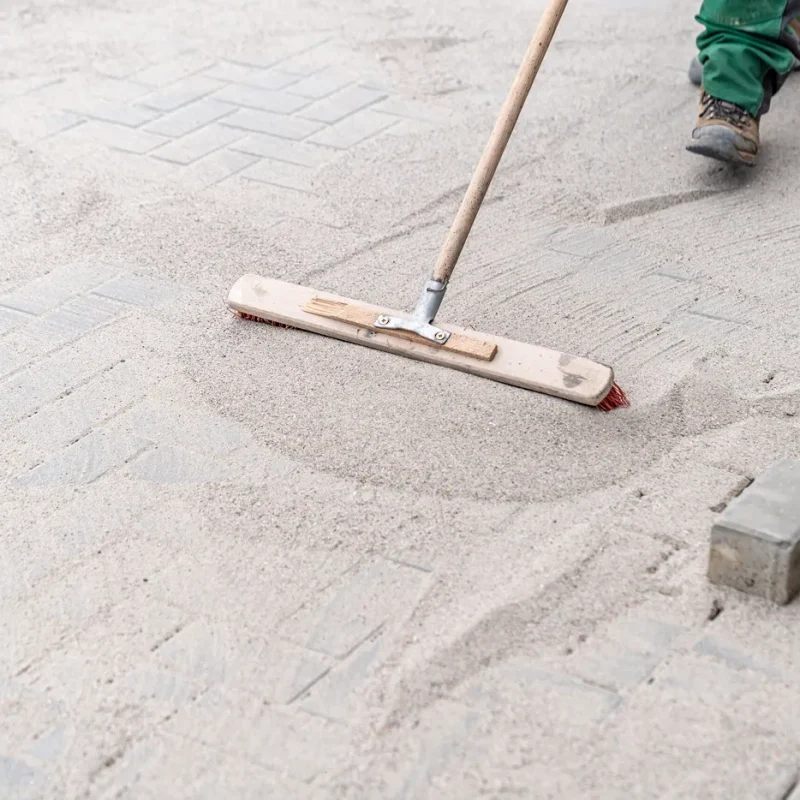
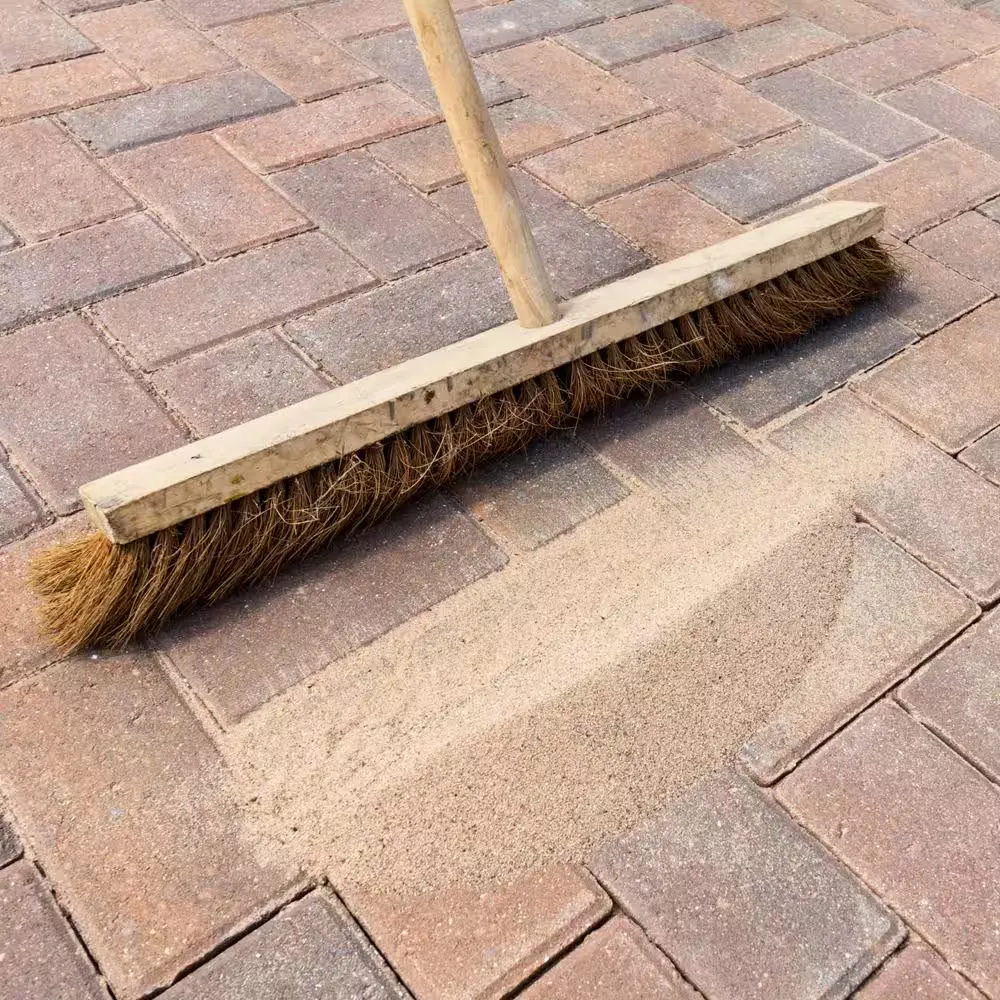
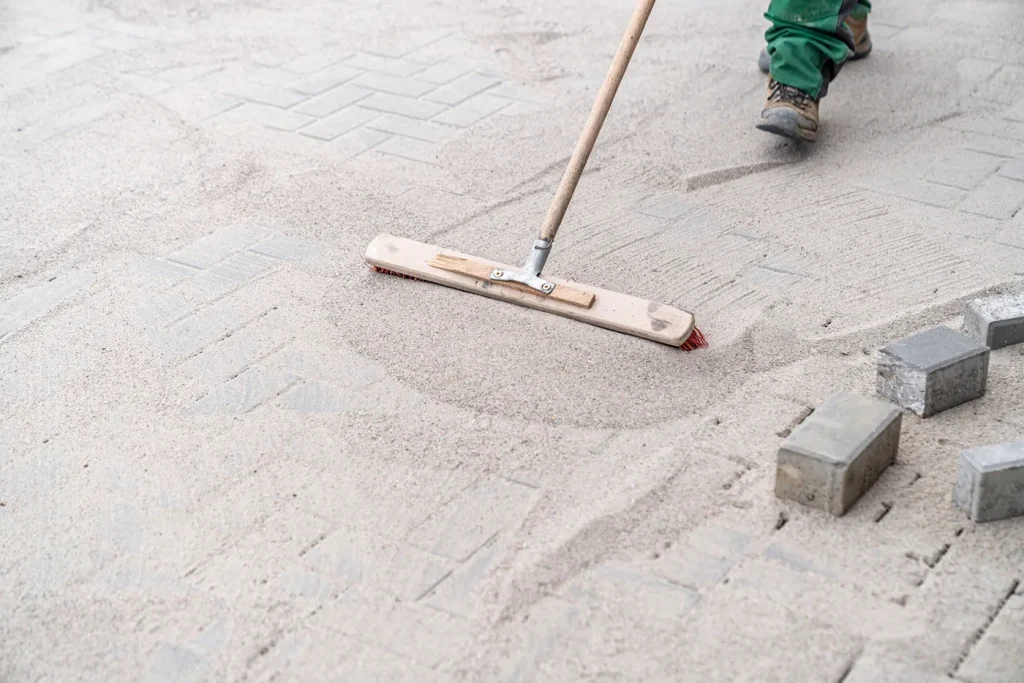
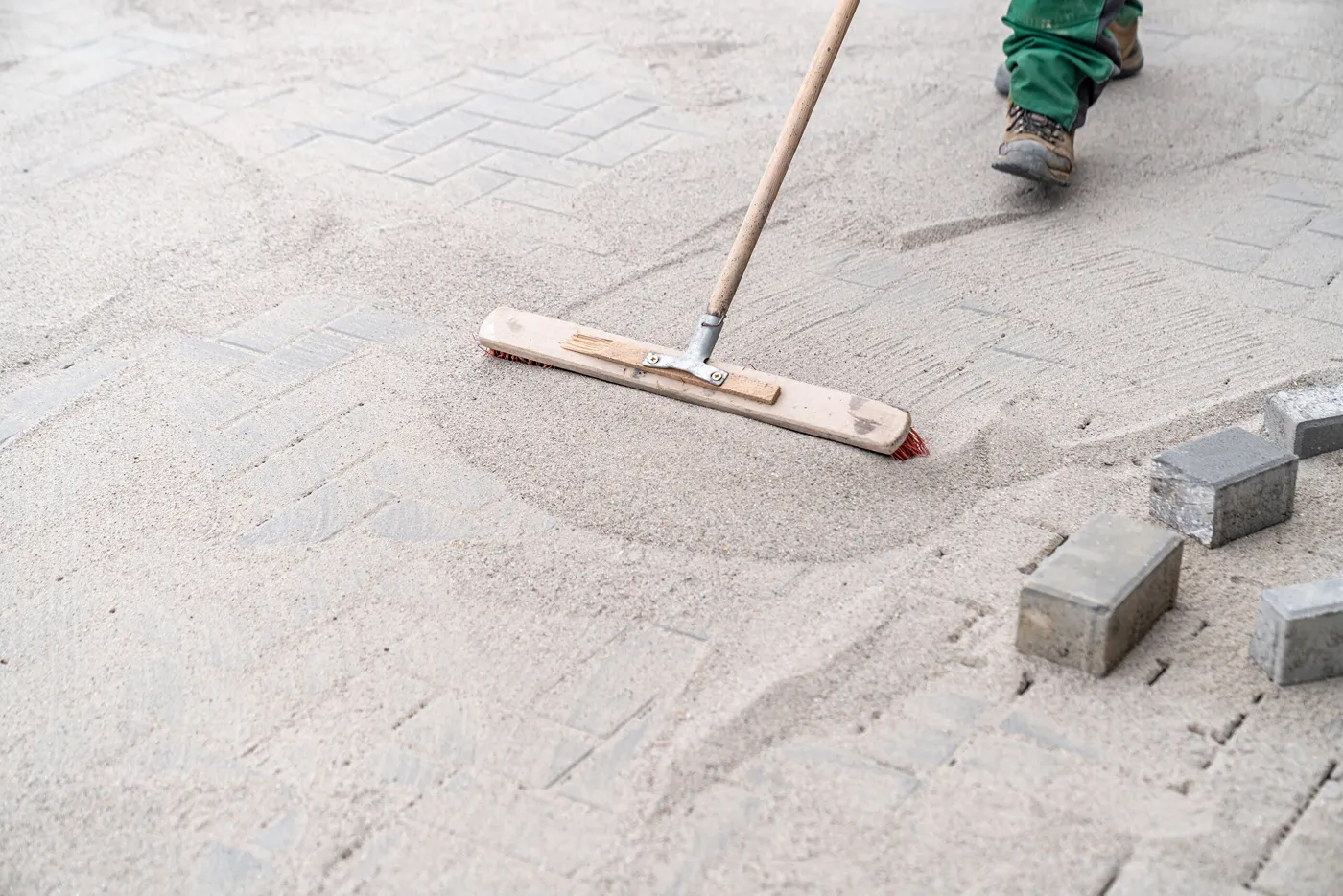
Once the joints are stripped, the patio has to dry fully. Then new polymeric sand is swept in, run over with a vibrating compactor to drive out air pockets, and topped off with more sand until every joint reaches the proper height. A light watering activates the polymer binders, and the sand cures hard. We schedule the job around the forecast so there’s no rain in the 24 hours after activation.
- Old sand and organics fully stripped before new install
- Vibrating compactor eliminates air pockets, then more sand swept in
- Joints filled to proper height for a full bond
- 24-hour rain-free window required after water activation
Best Done With Paver Cleaning or Sealing
Polymeric sand installation fits naturally into a paver cleaning or sealing project. If you’re already having pavers cleaned, adding polymeric sand is the logical next step before the pavers get resealed. If you’re resealing, the sand needs to be in place and fully cured first so the sealer can lock it in and protect it.
We sequence the work correctly — clean first, install sand, cure, then seal. If you want all three done in one project, we’ll schedule the job with the right time between steps built in.
- Pairs naturally with paver cleaning and sealing in one project
- Correctly sequenced — sand installed before sealer is applied
- Full project management from clean to sealed


Proven results Hartford County homeowners trust
Real conversations, real results. See why homeowners across Hartford County choose Wicked Clean for exterior cleaning.

Wicked Clean
Hi! How can we help you today?

Sarah M.
My driveway and house siding are covered in green algae. Can you give me a quote?
Wicked Clean
Absolutely! We can handle both. What town are you in?
Sarah M.
West Hartford — can you come this week?
Wicked Clean
You’re all set for Thursday at 9am. See you then!
Trusted by homeowners who are also your neighbours
500+ exterior cleaning projects completed and counting
4
yrs
Serving the people of Hartford County
5.0
★
Average Google rating across all reviews
See the Wicked Clean Difference
“When you choose our Polymeric Sand Installation service, you’re not just getting a clean property, you’re investing in your property’s long-term value.”
David Cass
Owner, Wicked Clean LLC
Frequently Asked Questions
What is polymeric sand?
Polymeric sand is a joint filler material made from fine sand and polymer binders. When swept into paver joints and activated with water, the polymers bind the sand into a firm, semi-flexible compound that locks in place. Unlike regular joint sand, polymeric sand resists washout, inhibits weed growth, and reduces ant infestation between pavers. It’s the professional standard for paver joint restoration.
How long does polymeric sand last?
Properly installed polymeric sand typically lasts 5 to 10 years before joints need to be refreshed, depending on traffic, exposure, and whether the pavers are sealed. Sealing over polymeric sand extends its lifespan significantly by protecting the joint from UV, water, and surface abrasion.
Can polymeric sand be installed without cleaning the pavers first?
It should not be. Residual sand, debris, or organic material in the joints prevents the new polymeric sand from bonding properly, leading to early joint failure. We always clean joints thoroughly before installation. If you’re also having the paver surface cleaned, that work happens before the sand goes in.
Do I need polymeric sand if my pavers are being sealed?
If your joints are eroded, you need new sand before sealing — sealer alone won’t fill or stabilize empty joints. If your joints are still intact and solid, sealing without new sand is fine. We assess joint condition during our pre-sealing inspection and recommend sand installation where it’s needed.
What areas do you serve for polymeric sand installation in Hartford County?
We serve all of Hartford County including West Hartford, Avon, Farmington, Simsbury, Granby, Canton, Bloomfield, and surrounding towns. Polymeric sand installation is typically booked alongside paver cleaning or sealing — contact us at (860) 748-8655 to discuss your project.